

01/07/2025
Achtung Japankäfer! - Ein gefährlicher Schädling auf dem Vormarsch
Der Japankäfer (Popillia japonica) ist ein unscheinbarer, aber äußerst gefährlicher Schädling, der mittlerweile auch in Europa für große Besorgnis sorgt. Er stammt ursprünglich aus Japan und dem fernen Osten Russlands. In Europa wurde er erstmals in den 1970er Jahren nachgewiesen und ist heute ein prioritärer Quarantäneschädling der EU – das heißt: Es besteht strikte Meldepflicht bei Verdachtsfällen!
Warum ist der Japankäfer so gefährlich?
Der Japankäfer ist ein Vertreter der Blatthornkäfer und zeigt eine extreme Vorliebe für Pflanzen – genauer gesagt: für mehr als 400 verschiedene Pflanzenarten. Dazu zählen unter anderem:
- Obstbäume (Apfel, Kirsche, Pfirsich)
- Weinreben
- Rosen
- Mais, Soja und andere landwirtschaftliche Kulturen
- Gräser und krautige Pflanzen


Der Schaden: Fraß von oben und unten
Der Käfer verursacht Schäden sowohl im Erwachsenenstadium als auch als Larve:
- Adulte Käfer fressen bevorzugt an den Blättern der Pflanzen – dabei kommt es oft zu einem Skelettierfraß oder gar vollständigem Kahlschlag.
- Larven hingegen fressen an den Wurzeln von Gräsern und krautigen Pflanzen, was zu Wachstumsstörungen, Welkeerscheinungen und im schlimmsten Fall zum Absterben der Pflanzen führt.
So erkennt man den Japankäfer
Die Bestimmung des Japankäfers ist nicht einfach – er wird häufig mit dem Gartenlaubkäfer, Maikäfer, Rosenkäfer oder Junikäfer verwechselt. Eine sichere Bestimmung gelingt durch genaues Hinschauen:
- Grün-metallisch glänzender Kopf und Halsschild
- Kupferbraune Flügeldecken
- Fünf weiße Haarbüschel auf jeder Seite des Hinterleibs
- Zwei weitere Haarbüschel am letzten Hinterleibssegment
Diese Haarbüschel sind das entscheidende Unterscheidungsmerkmal!
Verlinkung: AGES Steckbrief - Japankäfer (Popillia japonica)
Lebenszyklus
Der Japankäfer entwickelt eine Generation pro Jahr. Die erwachsenen Käfer erscheinen im Frühsommer, paaren sich und legen ihre Eier in den Boden ab. Die daraus schlüpfenden Larven überwintern im Boden und verpuppen sich im nächsten Frühjahr.
Monitoring und Bekämpfung
Zur Früherkennung und Kontrolle kommen Monitoringfallen zum Einsatz. Besonders bewährt hat sich hier der WitaTrap Fallenlampion Pro:
- Die Käfer werden mit dem Lockstoff Japoniwit® angelockt.
- Im oberen Bereich befindet sich eine Kreuzbarriere, an der die Käfer abprallen und in den Auffangbehälter darunter fallen.
- Für die gezielte Anlockung von Männchen gibt es die Variante Japoniwit® M.
Diese Fallen, zusammen mit dem richtigen Lockstoff, sind ein unverzichtbares Werkzeug im Kampf gegen eine weitere Ausbreitung.
Fazit
Der Japankäfer ist mehr als nur ein lästiges Insekt – er ist eine ernsthafte Bedrohung für die europäische Landwirtschaft und Forstwirtschaft. Früherkennung, korrekte Bestimmung und konsequentes Monitoring sind entscheidend, um eine unkontrollierte Ausbreitung zu verhindern. Bei einem Verdacht sollte umgehend die zuständige Pflanzenschutzbehörde informiert werden – denn jede Minute zählt im Kampf gegen diesen Schädling.
Pheromone & Fallen für den Japankäfer
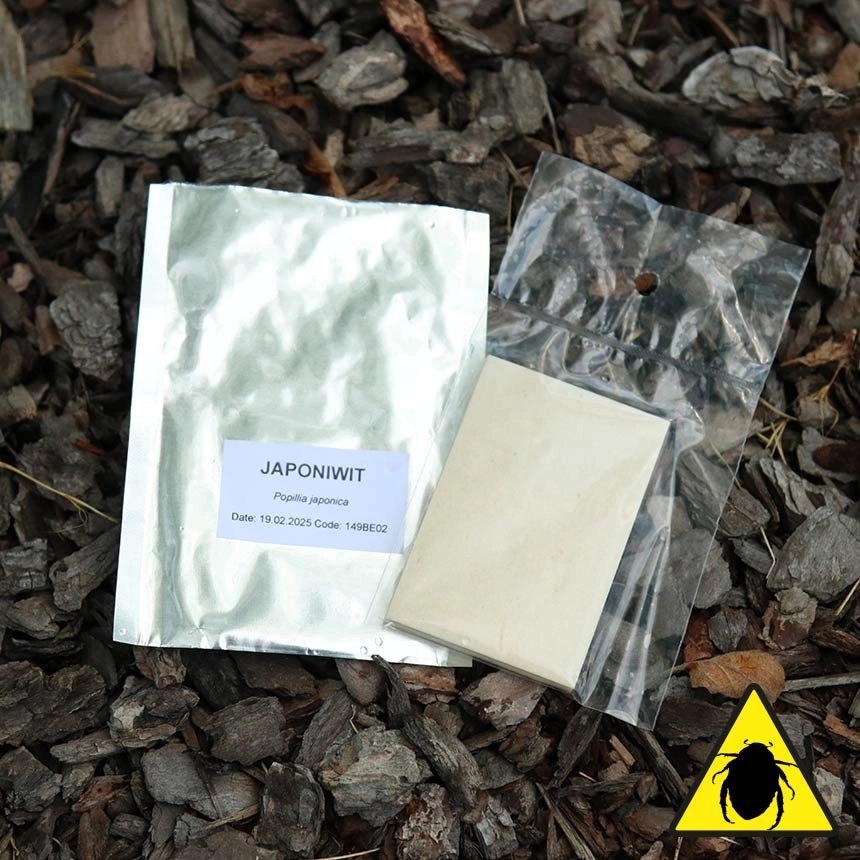
Pheromone to attract the Japanese beetle (Popilia japonica)
Shipping unit: Pack of 5against the Japanese beetle (Popilia japonica)Origin: Japan, spread to Italy and Switzerland on corn, vines, roses, hardwoods, and others.Pheromone type: tube dispensereffective: approx. 4-6 weeks*
*depending on the weather.Recommended monitoring locations: Bucket funnel traps near preferred host plants (especially corn) along transport routes (e.g., motorway rest areas, terminals, logistics), and nurseries or other locations where balled plants are imported from the distribution countries.Due to our many years of experience in the field of pheromone pests and our collaboration with forestry and plant protection services, we now also offer traps and attractants for those pests that must be monitored under the provisions of the new EU Plant Health Regulation according to the EFSA guidelines.Read the product information before use! This is available for download below: "Storage & Handling of Witasek Pheromones"
Storage of pheromones: Store the product in its tightly sealed original packaging (usually aluminum packaging) in a cool, dry place, well-ventilated. Keep away from heat and ignition sources.
Recommended storage: At sub-zero temperatures, e.g., in the freezer.
Suitable traps can be found under "Accessories" below.
Price on request
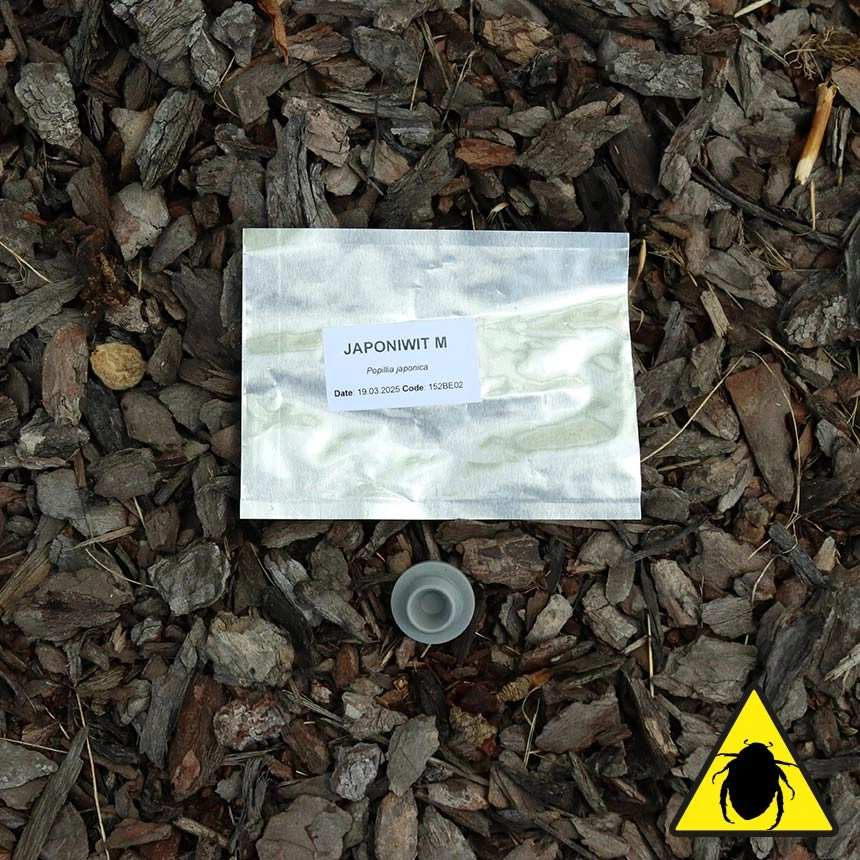
Pheromone to attract the male Japanese beetle (Popilia japonica)
Shipping unit: Pack of 5 against the male Japanese beetle (Popilia japonica) Origin: Japan, spread to Italy and Switzerland on corn, vines, roses, hardwoods, and others. Pheromone type: rubber septaeffective: approx. 4-6 weeks*
*depending on the weather. Recommended monitoring locations: Bucket funnel traps near preferred host plants (especially corn) along transport routes (e.g., motorway rest areas, terminals, logistics), and nurseries or other locations where balled plants are imported from the distribution countries. Due to our many years of experience in the field of pheromone pests and our collaboration with forestry and plant protection services, we now also offer traps and attractants for those pests that must be monitored under the provisions of the new EU Plant Health Regulation according to the EFSA guidelines. Read the product information before use! This is available for download below: "Storage & Handling of Witasek Pheromones"
Storage of pheromones: Store the product in its tightly sealed original packaging (usually aluminum packaging) in a cool, dry place, well-ventilated. Keep away from heat and ignition sources. Recommended storage: At sub-zero temperatures, e.g., in the freezer.
Suitable traps can be found under "Accessories" below.
Price on request
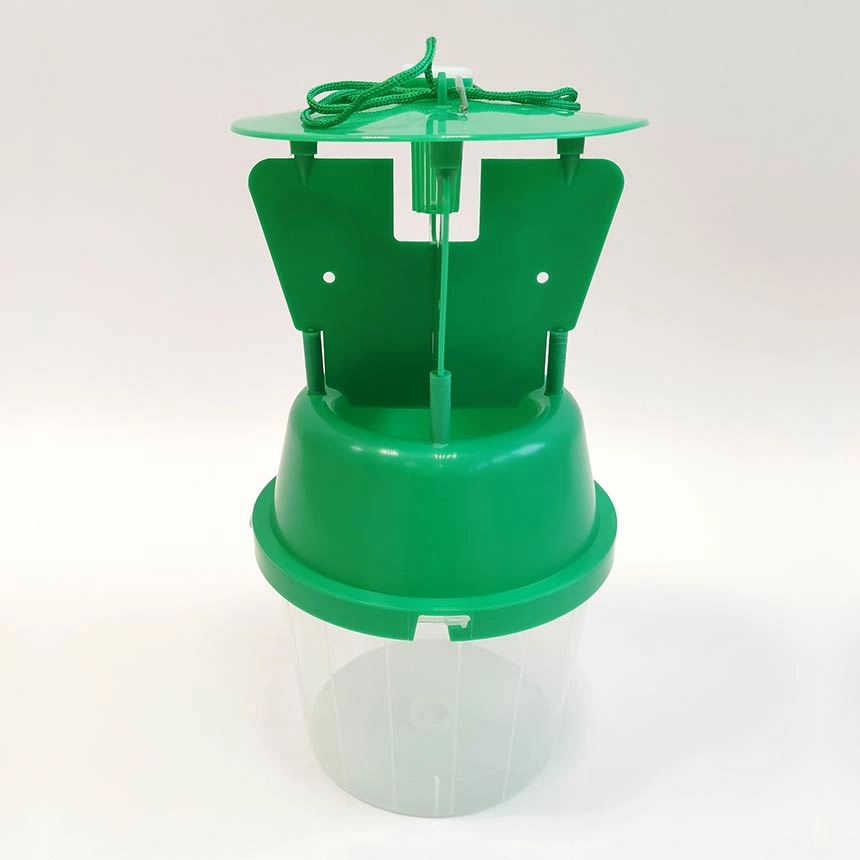
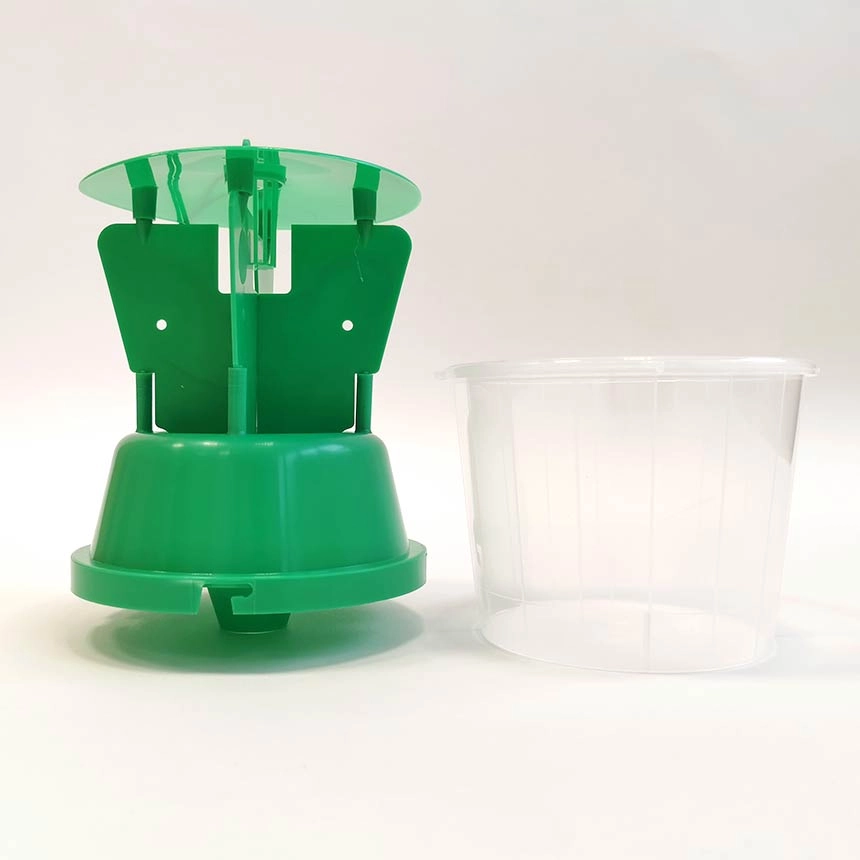
WitaTrap Funnel Trap Pro - Trap with cross vanes and transparent capture container for mass capture suited for moths and beetles
shipping unit: 1 piece
Dimensions: 17 cm x 31 cm (diameter x height)
Weight: 290 g
The WitaTrap Funnel trap Pro has above cross vanes and an transparent capture container.
Install pheromone underneath trap cover in holding unit.
Moths attracted by the pheromone fall into capture container and cannot fly out (live trap).
especially suited for insects like gipsy moth, nun moth, oak processionary moth, goat moth, leopard moth, winter moth, cockchafer, old house borer, and many others
colors:
- Trap and cross vanes: green
- Capture container: transparent
Don't forget to order the right pheromone!